A Grating Topic: Parmesan Cheese
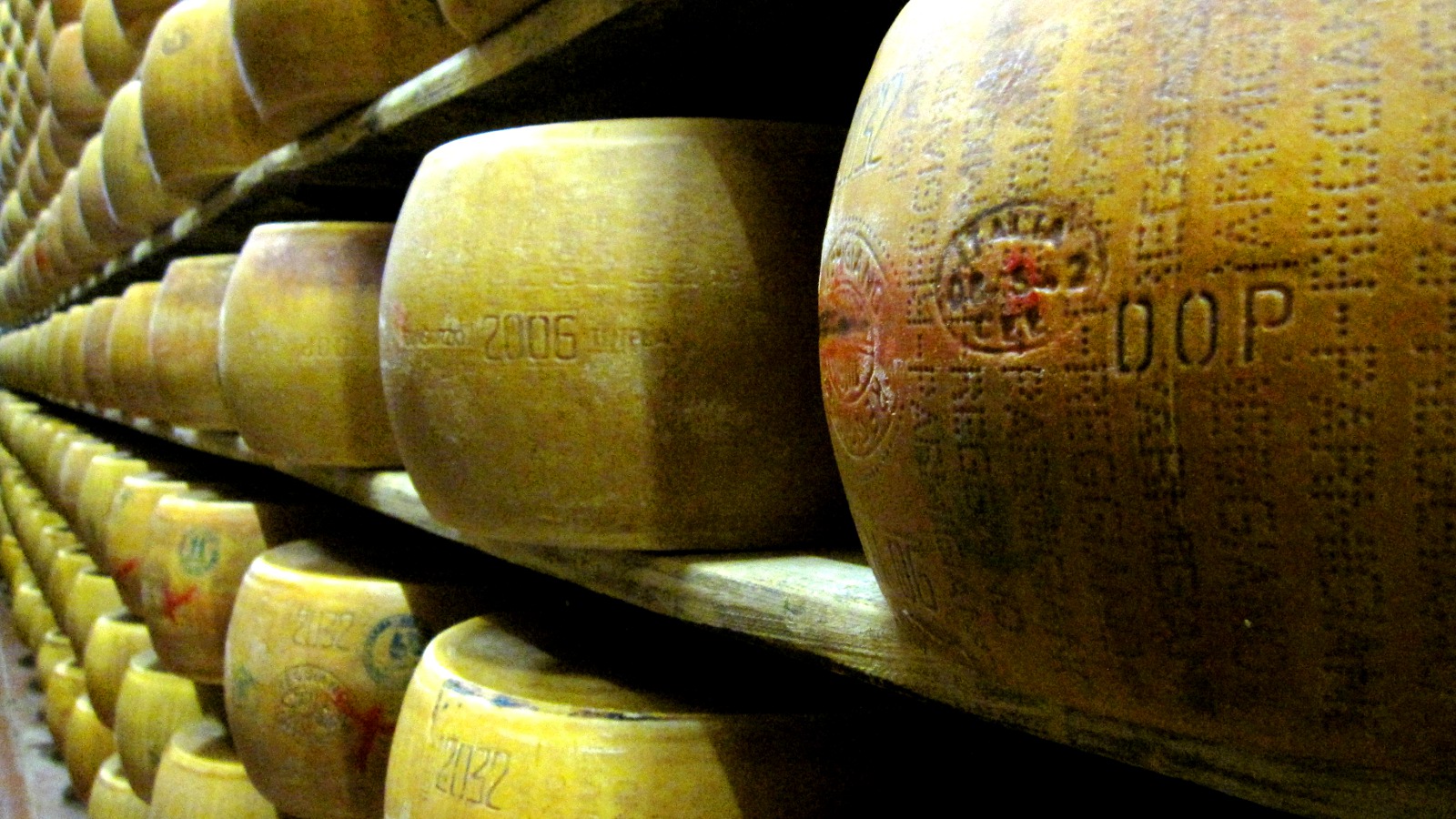
Toward the end of 2008, there was an unpopular multi-million dollar bailout by the government for the benefit of a single industry. No, I’m not talking about Wall Street, or the auto manufacturing industry, or insurance on obscure structured finance products. I’m talking about the Italian cheese market.
Back when the rest of the world’s politicians were stumbling over how to manage the global financial crisis, Italy enacted measures to help its cheesemakers. The government bought up 100,000 wheels of the highly touted parmesan cheese, along with 100,000 wheels of another popular cheese, grano padano. The reason? The wholesale price of these cheeses had fallen to €7-7,50/kg, below the production cost of €8-8,50/kg needed to make traditional parmigiano-reggiano cheese. And if the country’s signature cheese industry went under, what else would Italy have to offer? Mio dio! Thus, much parmesan was bought to help prop up the price and rescue Italy’s 430 or so parmesan cheesemakers. The food was subsequently donated to charity.