Panorama

The Terra Madre Formula: Farmer = Revolutionary
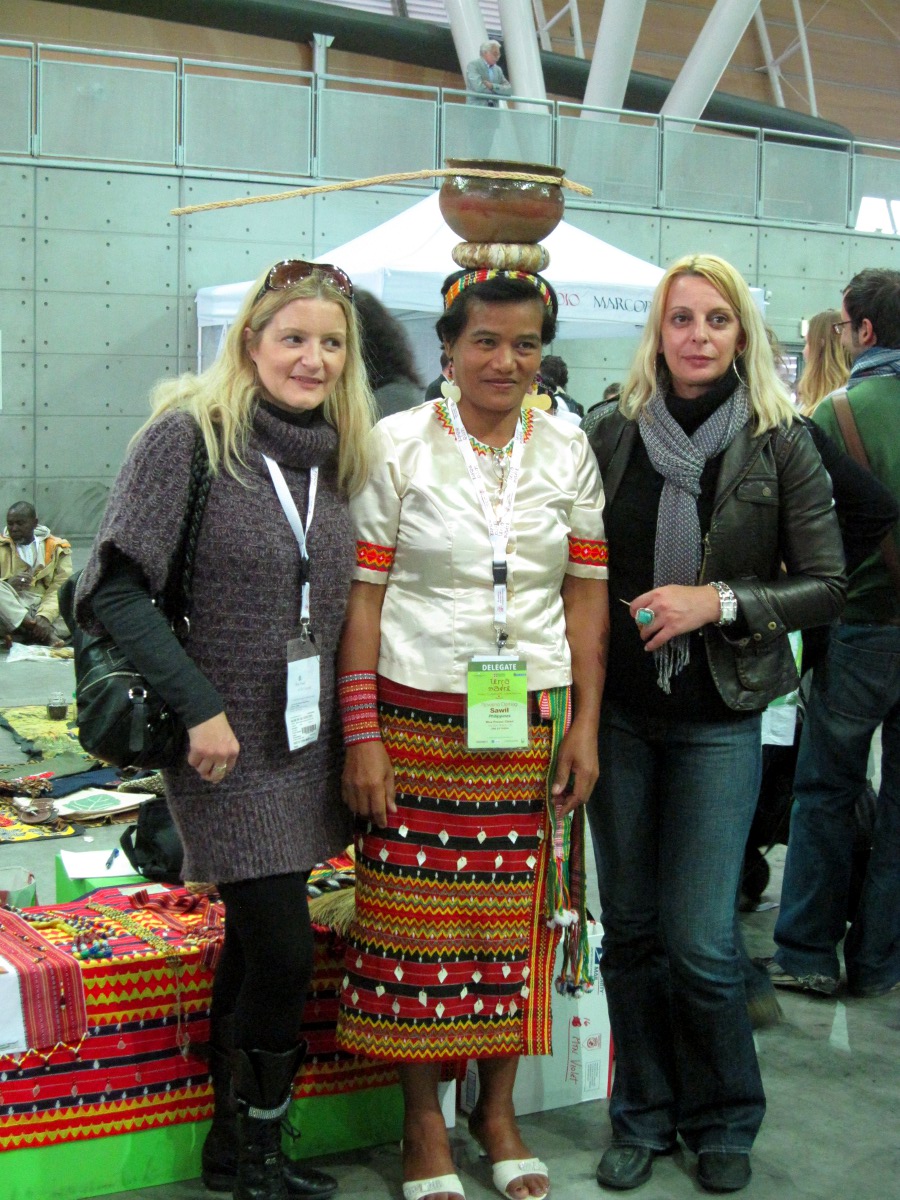
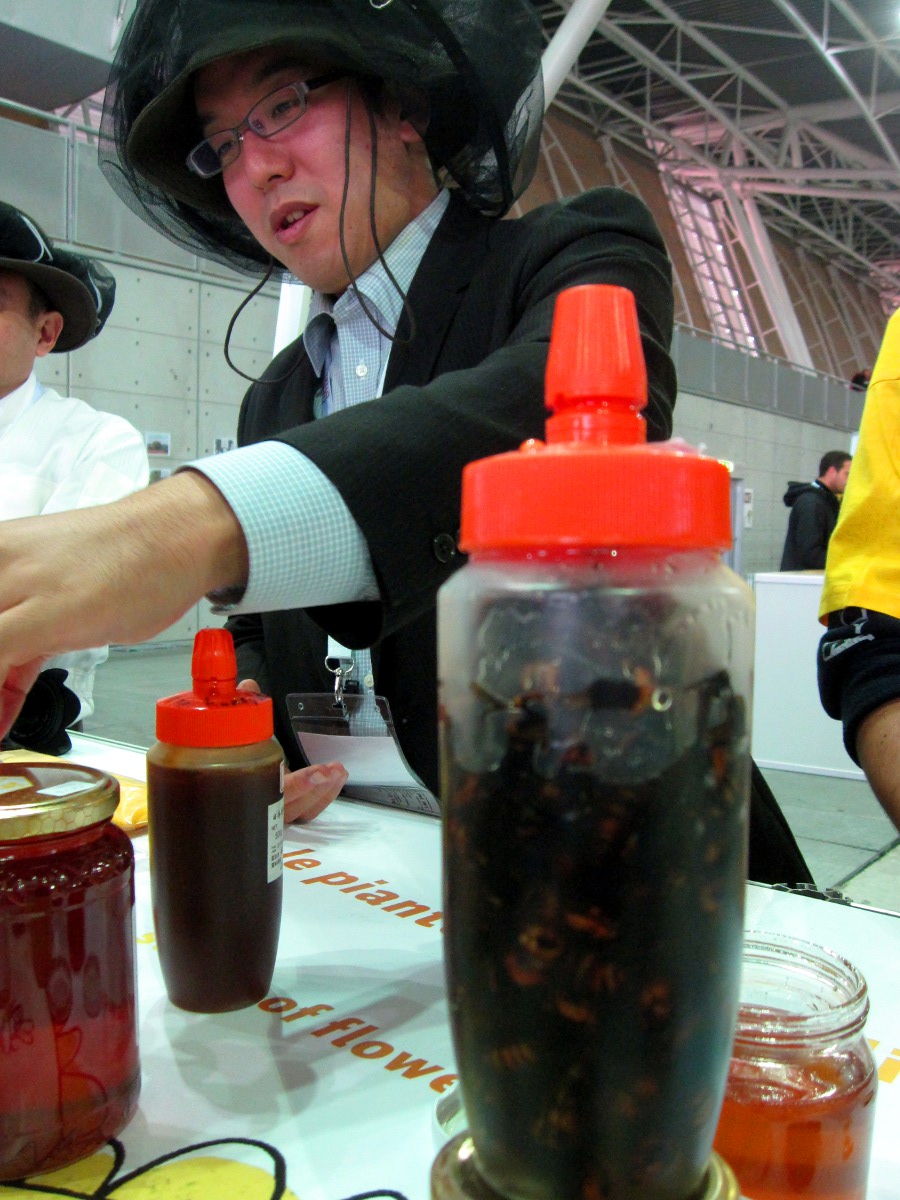

Delegate from the Philippines demonstrates her prowess at balancing objects on her head; Japanese beekeepers gather at the Honey Bar

At the registration for Terra Madre, small pins were passed out depicting the silhouettes of a farmer and a soldier, with an equals sign between them. In many ways, this icon summarizes what Terra Madre is about. It is a gathering of food communities and food producers, and a strategy session on how best to battle the onslaught of industrialized food, environmental degradation and social injustice. (Update: I’ve learned that the pins are from Slow Food Nation, and actually depict farmer = Statue of Liberty. Apparently I glanced at it too quickly.)
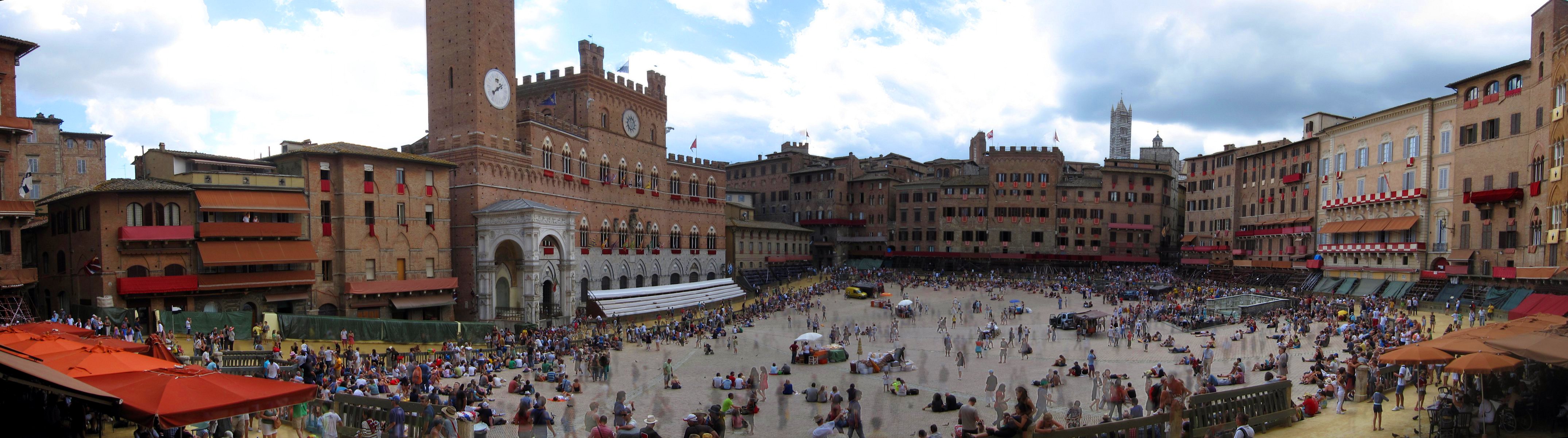
Scenes from the Palio di Siena

Liberamente nel Campo di Siena / Ogni vergogna deposta, s’affisse.
(Freely upon the Campo of Siena / All shame being laid aside, he placed himself.)
-Dante, Purgatory, XI 134-135

Having been born in Louisville, home of the celebrated Kentucky Derby, I was pretty keen to hear about another famed horse race in Italy, the Palio di Siena. This race is generally held twice annually, on July 2 and August 16, and takes place in the town’s main square, the Piazza del Campo. A dirt track is laid out on the ground, bleachers are thrown up and the town takes a day off to carouse and carry on a centuries-old tradition.

Hiking the Männlichen Summit

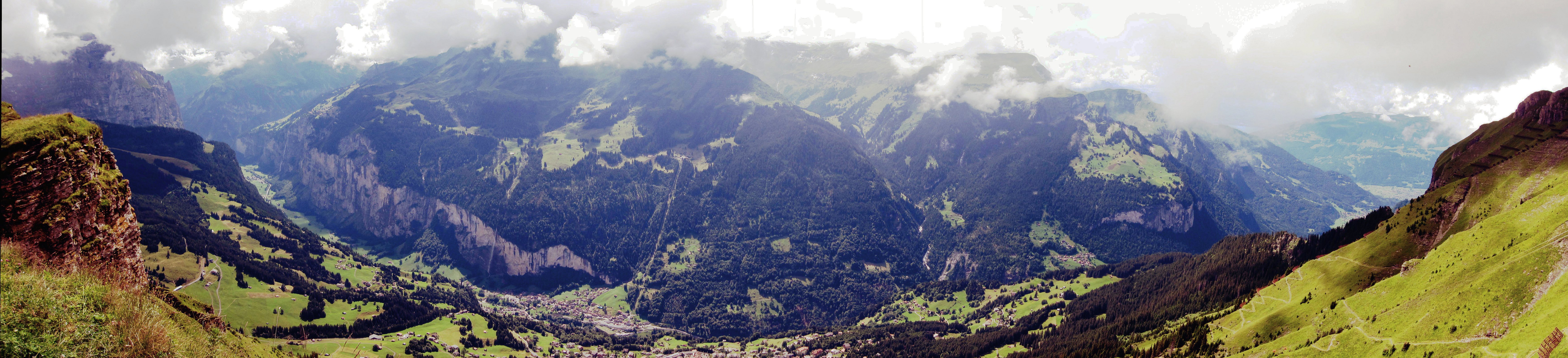
View from Männlichen into the Grindelwald valley

In German, the word for hiking is wandern, and can be expanded to mean anything from migrating, journeying and wandering. And indeed, you can do quite a lot of hiking in Switzerland simply by wandering from signpost to signpost on the country’s 50,000 km of marked trails. Even the smallest mountain outposts are easily found via an intricate system of wanderwege routes (marked by yellow signs) found between lakes, valleys and towns, higher altitude bergwege mountain paths (marked by white-red-white blazes), and rugged alpine routen trails (marked by white & blue blazes) that can include steep drop-offs and sections with cables or handholds.

Mountain Biking the Lauterbrunnen Valley

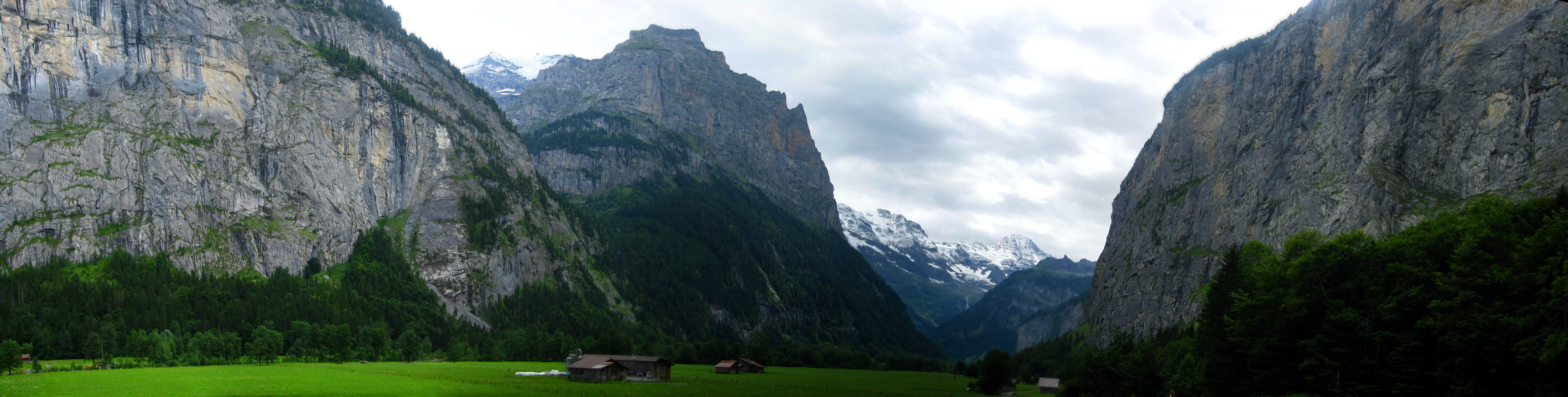
View of the Lauterbrunnen valley on the way to Stechelberg

For CHF 35, you can rent mountain bikes from Balmer’s hostel, which is a decent deal for a full day of biking. (Hint: we were later informed by other travelers that you can go around the corner to rent bikes for just CHF 20.) Armed with a map of the Jungfrau region, the activities guide at Balmer’s suggested biking to Wildersil, through Zweilutschinen to Lauterbrunnen, where we could stop for lunch. From Lauterbrunnen, you can bike to Stechelberg, take the gondola up to Murren, then bike down the mountain back to Lauterbrunnen and Interlaken. The route is mostly gravel, with some short sections of dirt and pavement.

Interlaken: Jungfrau’s Cosmopolitan Hotspot

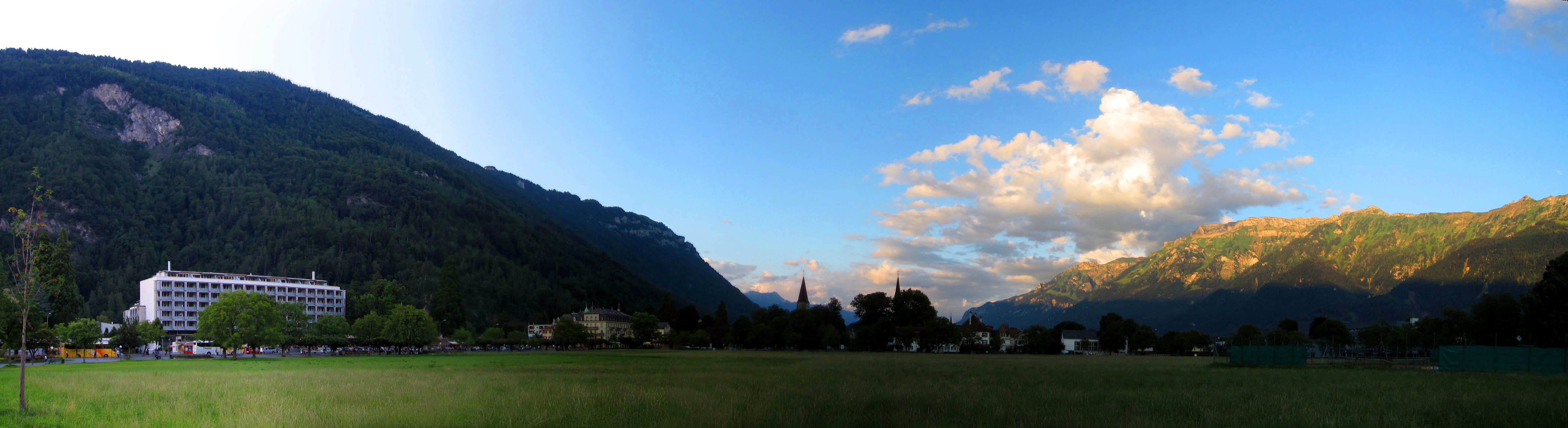
Interlaken is an unusual confluence of college-age backpackers, international tourists, avid nature lovers and extreme sports enthusiasts. Strolling around the town’s grassy quadrangle, it is not unusual to see American frat boys, veiled Muslim women and Korean photographers, all gathered to take in the beauty of the Jungfrau peak of the Berner-Oberlander region, while sipping a beer at Hooters. Due to the town’s central location and diverse amenities, Interlaken is well-known globally as a tourist hotspot. English-speaking travelers should have no trouble navigating the town, given that there is signage and menus written in languages from French to Korean. On the downside, the town does have quite a few tourist trap restaurants and probably more souvenir shops per capita than any other town I have seen. The best meal I had in Interlaken was at the Cafe de Paris, just a block north of the main drag, with reasonably priced entrees (~20 CHF) and excellent food. The beer of choice here is Rugenbräu, which unfortunately reminds me a lot of Bud Light. For better alternatives, I recommend Buddy’s Pub, which also has Feldschlösschen Hopfenperle and Dunkle Perle on tap.

Zurich: Financial Centre with an Edge

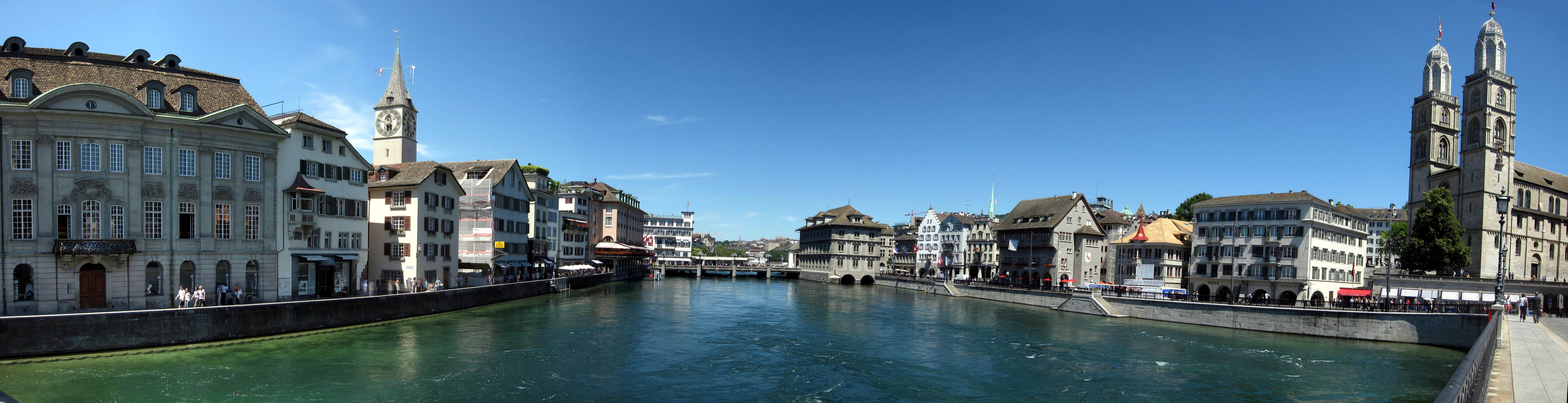
Limmat River cuts through Zurich and is crisscrossed by many bridges. You can see the twin towers of the Grossmünster church on the right, and the tower of St. Peterskirche on the left, which boasts the largest church clock face in Europe.

Let’s throw this out there first: Zurich is expensive. And not in the same way as other purportedly expensive cities I have traveled in (Tokyo, NYC), where there is a large range in prices, and some goods are nosebleeding pricey but you can find deals if you look in the right places. Instead, Zurich seems to have uniformly leveled all of its prices about $10-20 up from what you might expect. Strolling through downtown Zurich, it is usual to see coffee for CHF 7 and Chinese take-out for CHF 16. (Right now, CHF 1 = $0.96.) Even the “dollar” menu at McDonald’s has been replaced with burgers for CHF 2.50 and a side salad for CHF 3. A small size meal with an “NYC Crispy” burger costs CHF 12.30. An 800 meter cab ride from the main train station sets you back CHF 26 and dinner at an average restaurant runs about CHF 35. Even Swiss products that I have bought in the US (Victorinox knives, Sigg water bottles) cost more in Switzerland. I am scratching my head as to why there isn’t more cross-border arbitrage.

Turin: Piazza San Carlo Panorama

A panorama of Turin’s Piazza San Carlo, one of the most important town squares in the city. The Americans in the group lamented the lack of town squares in the US when we saw this one. Much of the architecture dates back to the 17th century, with an equestrian monument dedicated to Emanuele Filiberto (Duke of Savoy) in the center, flanked on both sides by the rococo Palazzo Solaro del Borgo, with twin baroque churches dedicated to San Carlo and Santa Cristina on the other end. In the Palazzo Solaro, you can see echos of admiration for the Louvre in Paris. In modern times, the plaza has been the site of many public gatherings, from victory celebrations for Juventus (soccer) fans to mass with the Pope to commemorate the public display of the Holy Shroud of Turin (believed to be the burial cloth of Jesus).