Alps

Hiking the Männlichen Summit
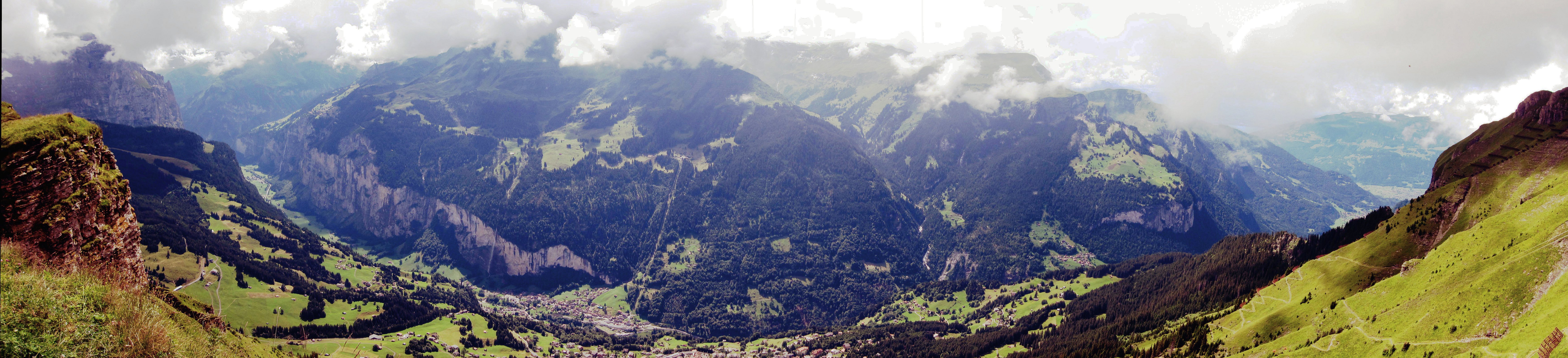
View from Männlichen into the Grindelwald valley

In German, the word for hiking is wandern, and can be expanded to mean anything from migrating, journeying and wandering. And indeed, you can do quite a lot of hiking in Switzerland simply by wandering from signpost to signpost on the country’s 50,000 km of marked trails. Even the smallest mountain outposts are easily found via an intricate system of wanderwege routes (marked by yellow signs) found between lakes, valleys and towns, higher altitude bergwege mountain paths (marked by white-red-white blazes), and rugged alpine routen trails (marked by white & blue blazes) that can include steep drop-offs and sections with cables or handholds.
Mountain Biking the Lauterbrunnen Valley

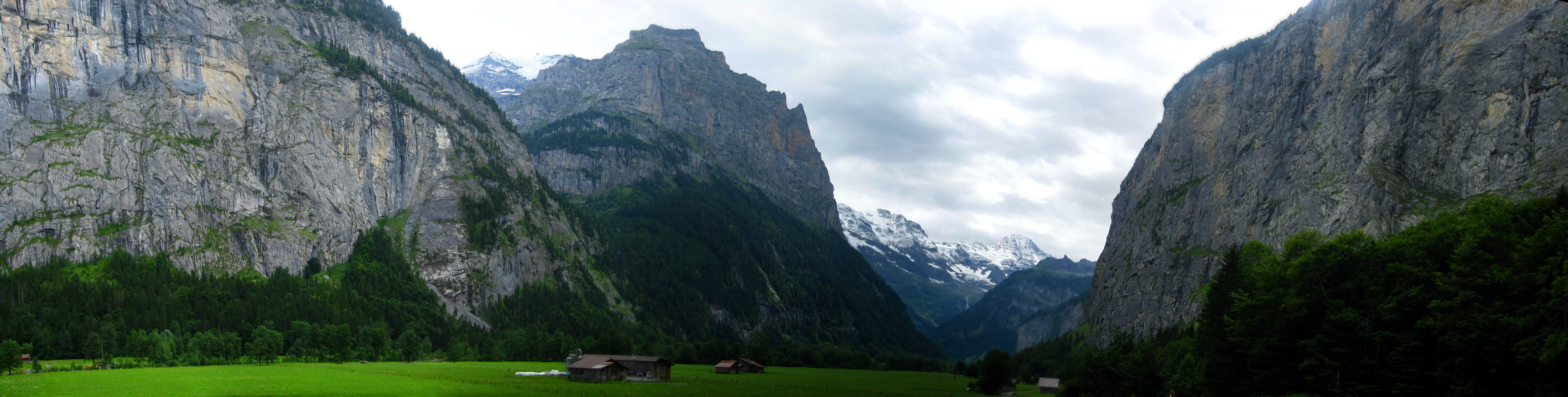
View of the Lauterbrunnen valley on the way to Stechelberg

For CHF 35, you can rent mountain bikes from Balmer’s hostel, which is a decent deal for a full day of biking. (Hint: we were later informed by other travelers that you can go around the corner to rent bikes for just CHF 20.) Armed with a map of the Jungfrau region, the activities guide at Balmer’s suggested biking to Wildersil, through Zweilutschinen to Lauterbrunnen, where we could stop for lunch. From Lauterbrunnen, you can bike to Stechelberg, take the gondola up to Murren, then bike down the mountain back to Lauterbrunnen and Interlaken. The route is mostly gravel, with some short sections of dirt and pavement.

Interlaken: Jungfrau’s Cosmopolitan Hotspot

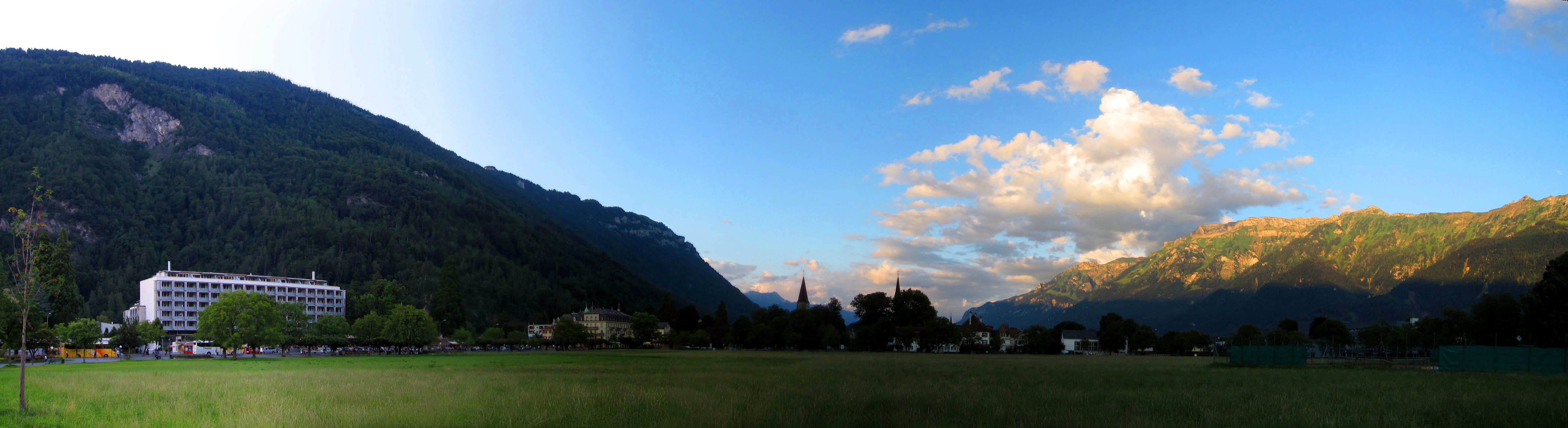
Interlaken is an unusual confluence of college-age backpackers, international tourists, avid nature lovers and extreme sports enthusiasts. Strolling around the town’s grassy quadrangle, it is not unusual to see American frat boys, veiled Muslim women and Korean photographers, all gathered to take in the beauty of the Jungfrau peak of the Berner-Oberlander region, while sipping a beer at Hooters. Due to the town’s central location and diverse amenities, Interlaken is well-known globally as a tourist hotspot. English-speaking travelers should have no trouble navigating the town, given that there is signage and menus written in languages from French to Korean. On the downside, the town does have quite a few tourist trap restaurants and probably more souvenir shops per capita than any other town I have seen. The best meal I had in Interlaken was at the Cafe de Paris, just a block north of the main drag, with reasonably priced entrees (~20 CHF) and excellent food. The beer of choice here is Rugenbräu, which unfortunately reminds me a lot of Bud Light. For better alternatives, I recommend Buddy’s Pub, which also has Feldschlösschen Hopfenperle and Dunkle Perle on tap.

Hiking and Ruminating the Italian Alps


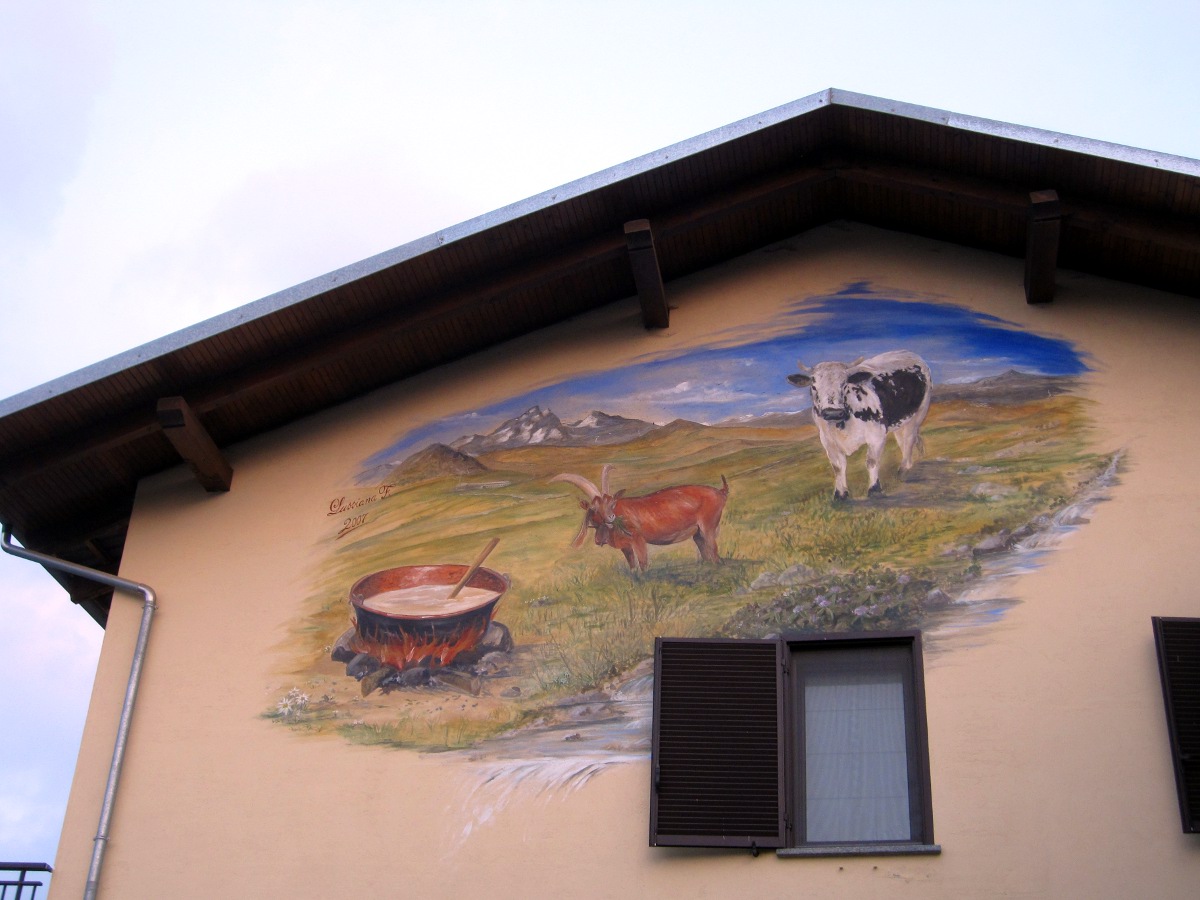
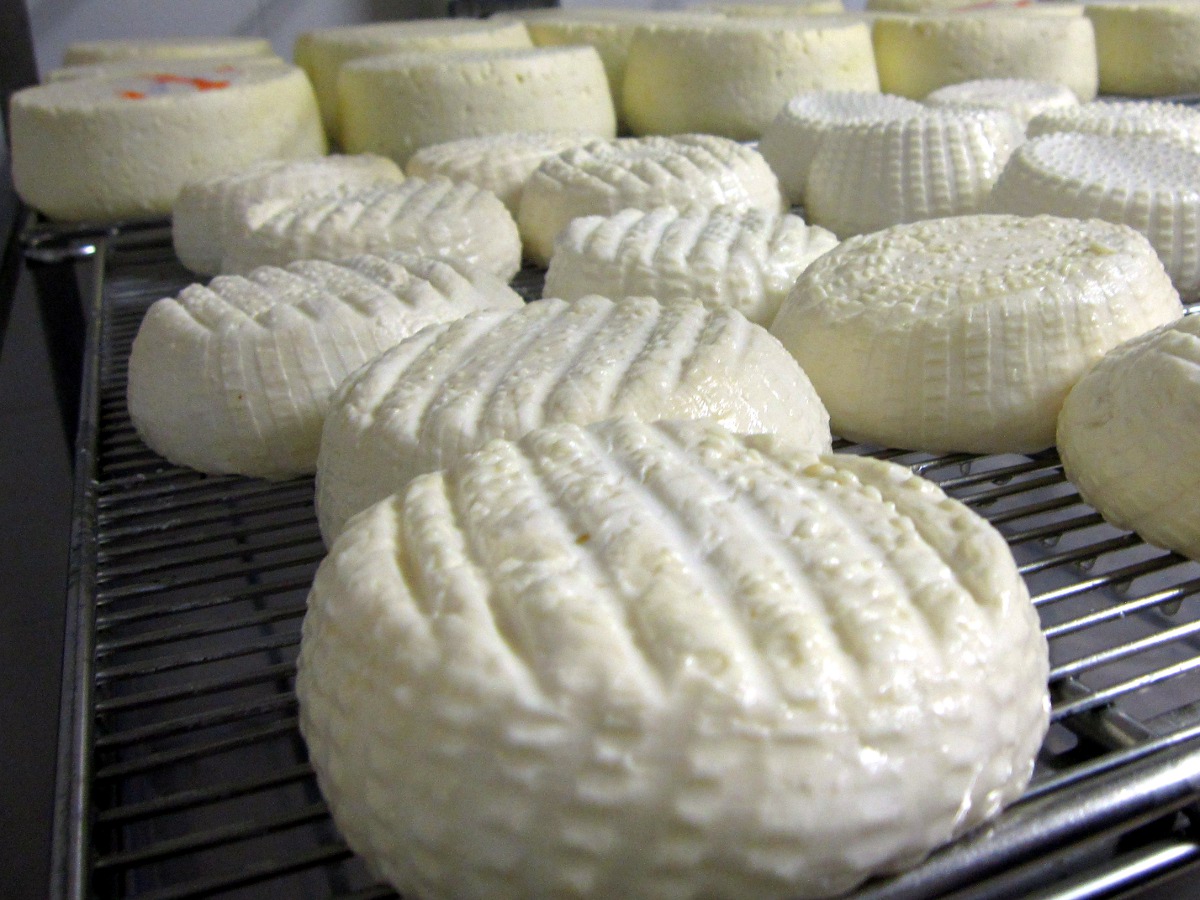
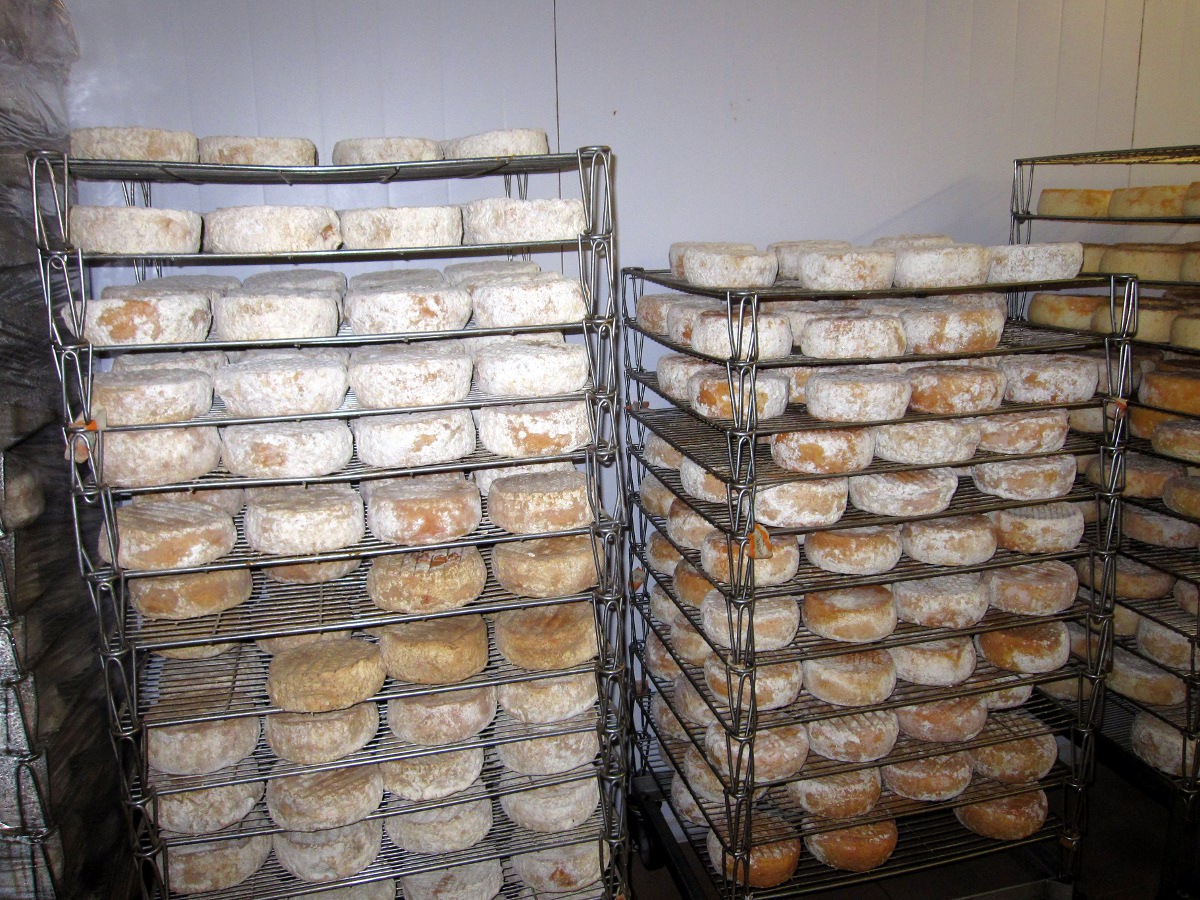
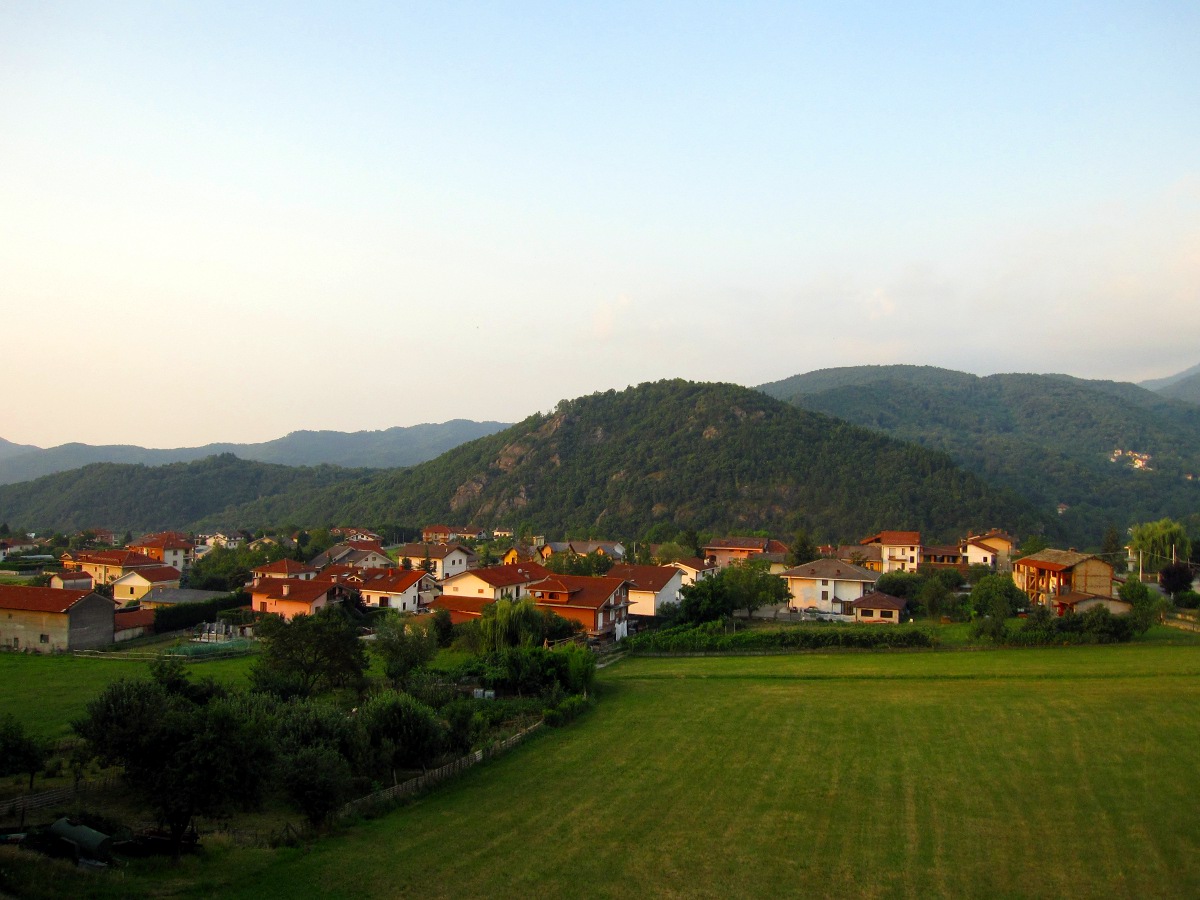
Clockwise: Mural of a mountain goat and cow outside Fratelli Lussiana creamery, fresh wheels of cevrin in warm room, foothills of Piedmont, aging wheels of cevrin in cold room

A couple weeks ago while on the Piedmont stage, our class visited Fratelli Lussiana creamery, a cheese producer in Giaveno, about 35 km west of Turin. The primary cheese they produce is cevrin di Coazze, made with half goat and half cow’s milk and aged for 3 months. At the time, I was tired, hot and not in the mood to see yet another farm, but we all fell headlong in love with this cheese producer. After showing us an overview of the cheesemaking process and aging rooms, the lovely Lussiana siblings piled us into a hay-filled tractor and trundled us up a narrow, rocky mountain path, while we tried to keep our balance, yodeled and ducked under overhanging tree branches. Once we reached the mountaintop farm, we were greeted by a herd of seriously dexterous goats, placidly ruminating cows, and the friendliest donkey in the world (who kept sneaking into photos and nuzzling for attention). The farm caretakers welcomed us with fresh wheels of cevrin, salame, bread and red wine, and we ate cheese next to the animals who produced the milk for it, as the sun went down over the Italian Alps. It was one of the best days of my life.